The Best New Self-Hosted Software to Try in March 2026
Tired of the same Nextcloud and Jellyfin lists? Here are the best new self-hosted apps that actually earned their spot in 2025–2026. Fresh picks, real trade-offs.

Every "best self-hosted apps" list on the internet shows you the same 10 tools. Nextcloud, Bitwarden, Jellyfin, Pi-hole, Home Assistant. Great tools, all of them. They also launched between 2013 and 2019.
Here's the thing: the self-hosting ecosystem moves fast. According to selfh.st's 2025 wrapped report, the community tracked more than 1,000 brand-new open-source self-hosted projects in 2025 alone. That's roughly 19 new tools every single week. Some of them are already displacing SaaS subscriptions for thousands of homelabbers.
This isn't that other list. This is the best new self-hosted software of 2026, apps that launched recently or broke into mainstream homelab use in the past year. Every pick here is actively maintained, Docker-deployable, and earning genuine community attention. We'll tell you what each tool does, who it's for, and where it falls short.
If you're running a home server or a small VPS and you're tired of spinning up the same stack, there's a lot of fresh ground to cover.
What makes a self-hosted app worth your time in 2026
Before the list, a quick framework. With hundreds of new projects dropping every month, most aren't worth your attention. Here's how we filtered:
Active development. A repo with commits from this year and open issues being addressed. Ghost projects are everywhere.
Docker Compose support. Practically non-negotiable in 2026. If you need to compile from source or fight with systemd just to run a personal app, the friction will wear you down.
Real community traction. GitHub stars matter, but so does the r/selfhosted discussion, the Discord activity, and whether people are actually running this in production, not just starring it.
Honest setup complexity. We rate each app: Low (up and running in 15 minutes), Medium (30-60 minutes, some config), or High (expect to spend an afternoon).
Apps that tick all four boxes are worth a serious look. The ones on this list check all of them.
The best new self-hosted apps of 2026
Monitoring and infrastructure
Beszel
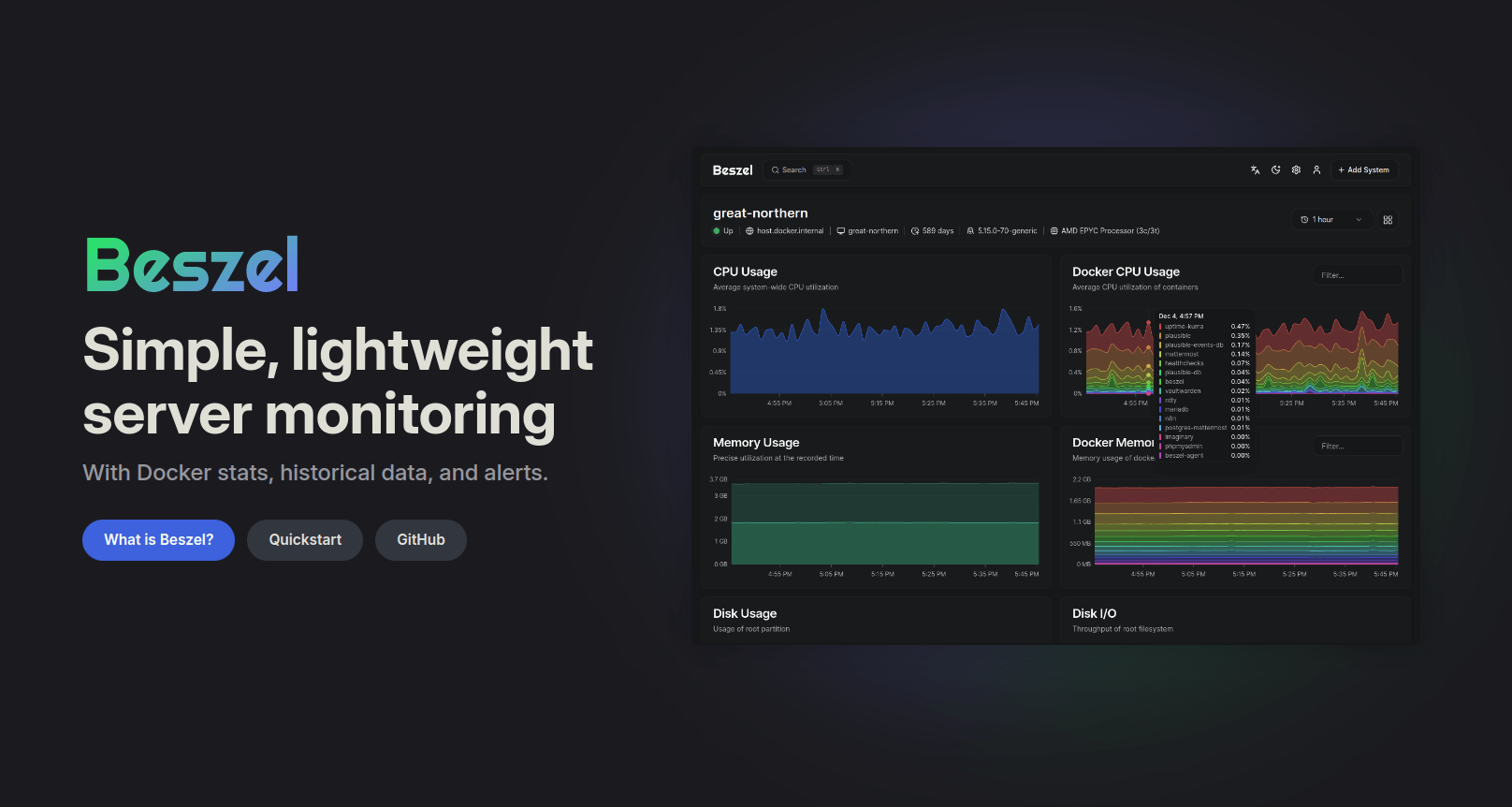
Most monitoring tools for homelabs are either too heavy (Grafana with Prometheus is powerful but overkill for a single box) or too limited. Beszel sits cleanly in the middle: a lightweight monitoring hub that shows real-time graphs for CPU, RAM, disk, and network across your servers and Docker containers, with alerts and multi-user support built in.
It's built to run with minimal resources, which makes it a good fit for low-power hardware like a Raspberry Pi or a small VPS where you don't want your monitoring tool eating the resources it's supposed to be monitoring. Setup complexity: Low.
Who it's for: Anyone running multiple machines or containers who wants a dashboard that actually feels fast.
Knowledge management and notes
The category that exploded in 2025. Notion and Confluence lock-in has pushed a lot of teams and solo builders toward self-hosted alternatives, and the options are now genuinely competitive.
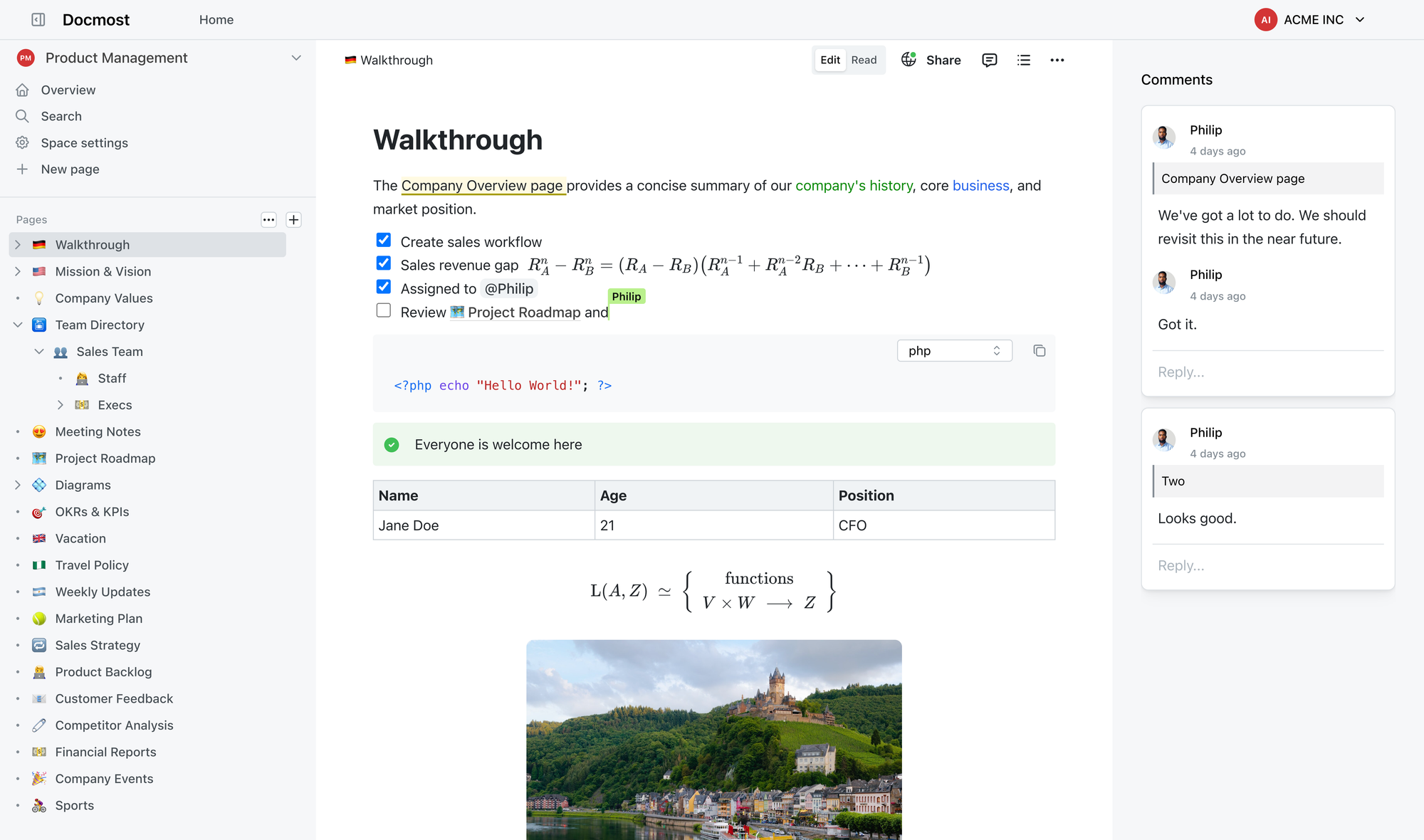
Docmost
Docmost is the most polished Notion and Confluence replacement available for self-hosting right now. It offers a rich collaborative editor with real-time co-editing, diagram support, page history, hierarchical structure, and multiple workspaces. The UI is clean and will feel immediately familiar to anyone coming from Notion.
The honest caveat: it's newer, so some of Notion's more niche integrations aren't there yet. But for documentation and internal wikis, which is what most teams actually use Confluence for, Docmost is ready for production. Setup complexity: Low.
NoteDiscovery
If Obsidian's local-first philosophy appeals to you but you want a self-hosted web app instead of a desktop client, NoteDiscovery is worth a look. It stores notes as plain Markdown files, has its own plugin system, graph views, and it's built for the "second brain" crowd who want ownership over their data without vendor lock-in. Setup complexity: Medium.
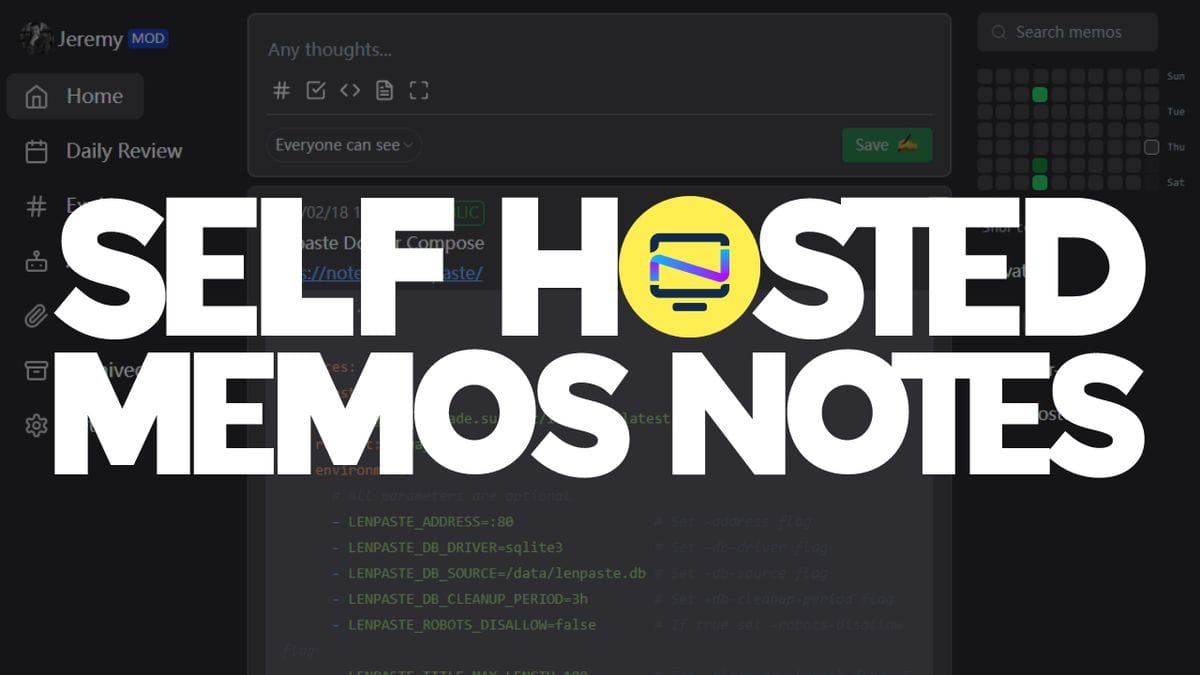
Memos
Memos is deliberately minimal. It's a privacy-first, lightweight note capture app that works more like a personal social feed than a document editor. Quick thoughts, links, and fragments land in a chronological stream. It's not a Notion replacement; it's the app you reach for when you want to capture something in five seconds without opening a heavy editor. Setup complexity: Low.
Bookmarking and link management
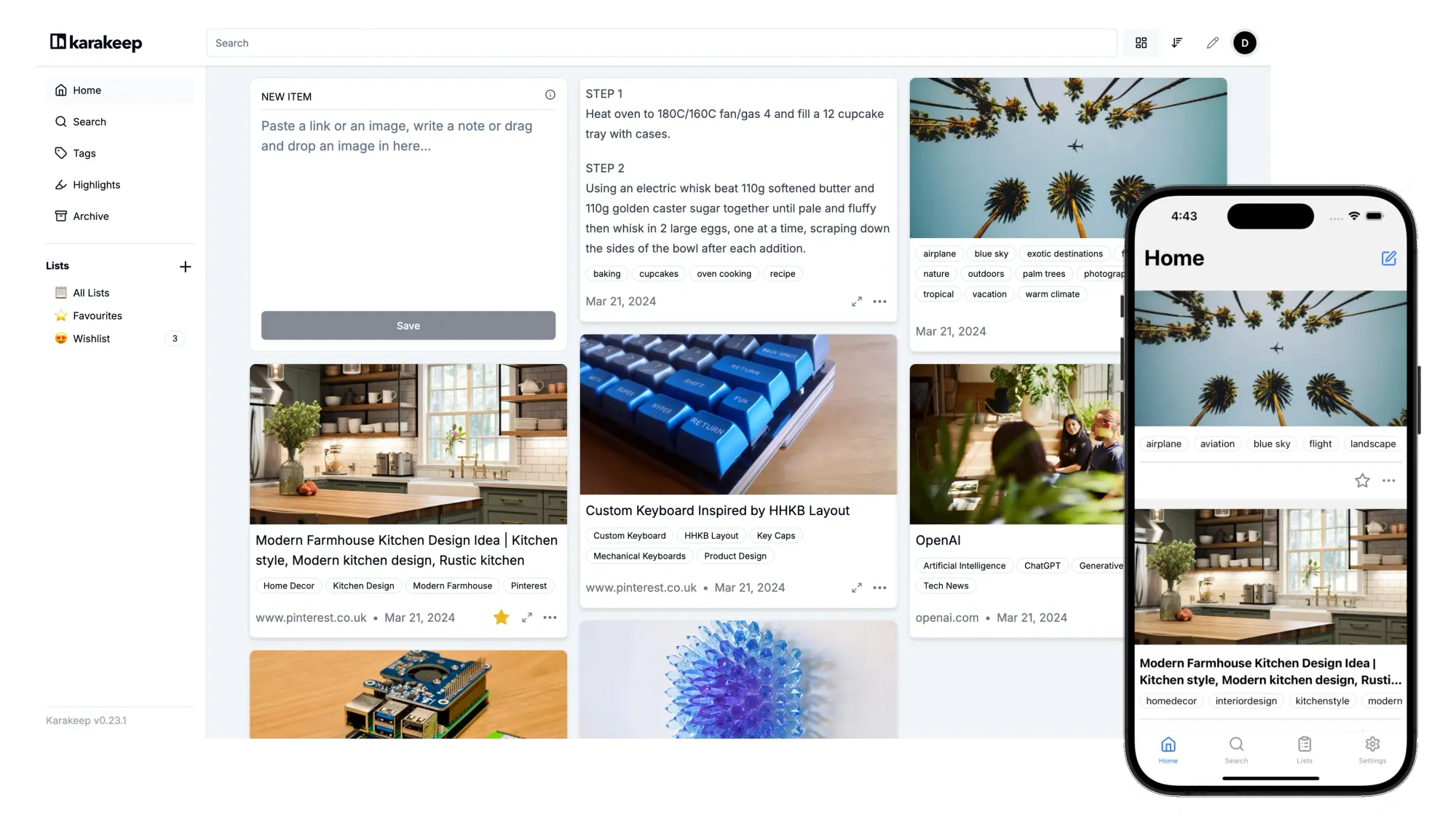
Karakeep (formerly Hoarder)
Hoarder was one of the most-discussed new apps in the homelab community through late 2024, and it recently rebranded to Karakeep. If you followed the original name, it's the same project. The rename reflects a broader scope: beyond just links, Karakeep handles notes, images, and PDFs alongside bookmarks, with full-text search across everything you've saved.
The feature that sets it apart is local LLM integration. If you're running Ollama or another local inference server, Karakeep can use it to auto-generate tags and summaries for your saved content entirely offline. No API keys, no data leaving your machine. For developers who are already running local AI models, this is a compelling pairing.
It also supports yt-dlp integration to download and archive videos alongside the metadata. Setup complexity: Medium.
Take Daniel, a developer who was paying $14/month for Raindrop.io to bookmark technical articles and docs. After running Karakeep for a week, he canceled the subscription. The full-text search was better, the AI tagging was more accurate (using his local Llama model), and everything lived on his NAS. The trade-off: no mobile app polish. He uses the progressive web app, which is fine.
Media and entertainment
Pinchflat
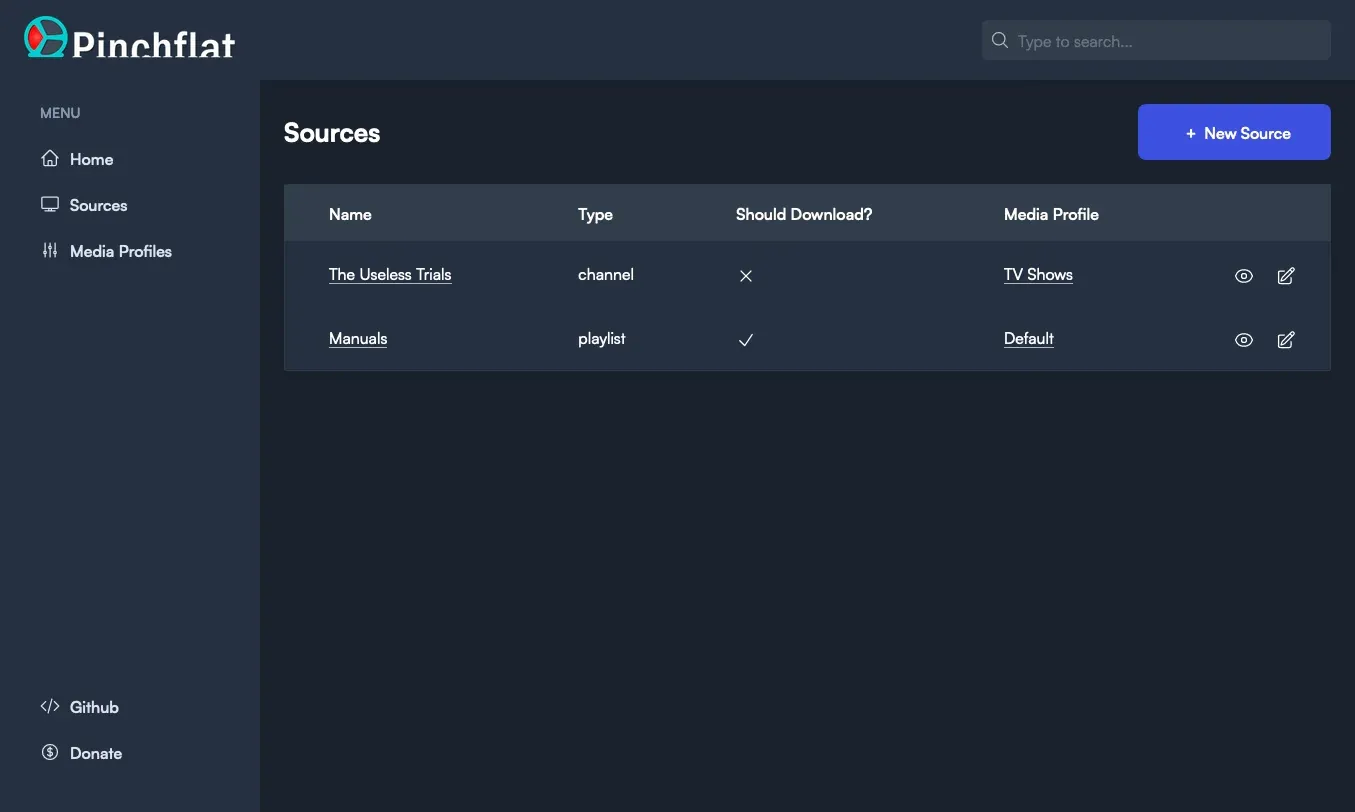
If you self-host Jellyfin or Plex and you also watch YouTube channels regularly, Pinchflat solves a real problem. It subscribes to YouTube channels and playlists, downloads new content automatically via yt-dlp, and drops it into a folder your media server watches. Your Jellyfin library stays current without you touching it.
This sounds simple, but it eliminates a genuine friction point: you watch YouTube creators you care about, you want that content available offline and in your media server, and you don't want to babysit the process. Pinchflat handles it. Setup complexity: Medium (requires configuring watched folders with your media server).
Streamyfin
Streamyfin is not a media server. It's a client for Jellyfin, built to compete with the polished experience of commercial streaming apps. Where the official Jellyfin clients are functional but unpolished, Streamyfin adds intro and credits skipping, Trickplay image scrubbing, background audio, picture-in-picture, offline downloads, and Chromecast support.
If you're committed to Jellyfin as your media server, this client makes the daily experience significantly better. Setup complexity: Low (it's a client app, no server configuration required).
Social media and content scheduling
Postiz
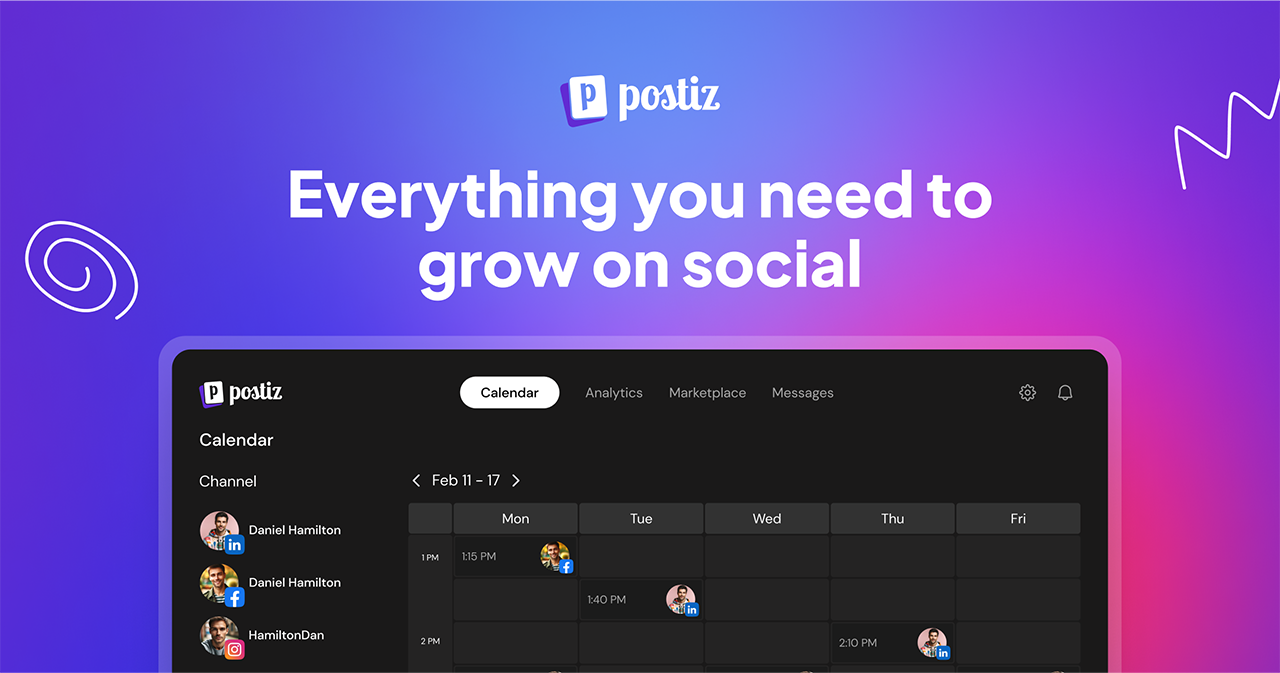
Postiz is an open-source social media scheduling platform, the self-hosted equivalent of Buffer or Hootsuite. It supports X (Twitter), Bluesky, Mastodon, Discord, LinkedIn, and several other platforms, with a scheduling calendar, analytics, and AI-assisted content suggestions built in.
The self-hosted version has no paywalled features. You get everything. For developers, indie hackers, and small teams who are already paying $15-50/month for a social scheduler and would rather run it themselves, Postiz is worth the setup time. The Docker Compose file is straightforward.
One honest note: social media platform APIs change constantly, which means self-hosted scheduling tools require occasional maintenance when a platform updates its authentication flow. You're taking on that upkeep yourself. Setup complexity: Medium.
Analytics and data
Rybbit
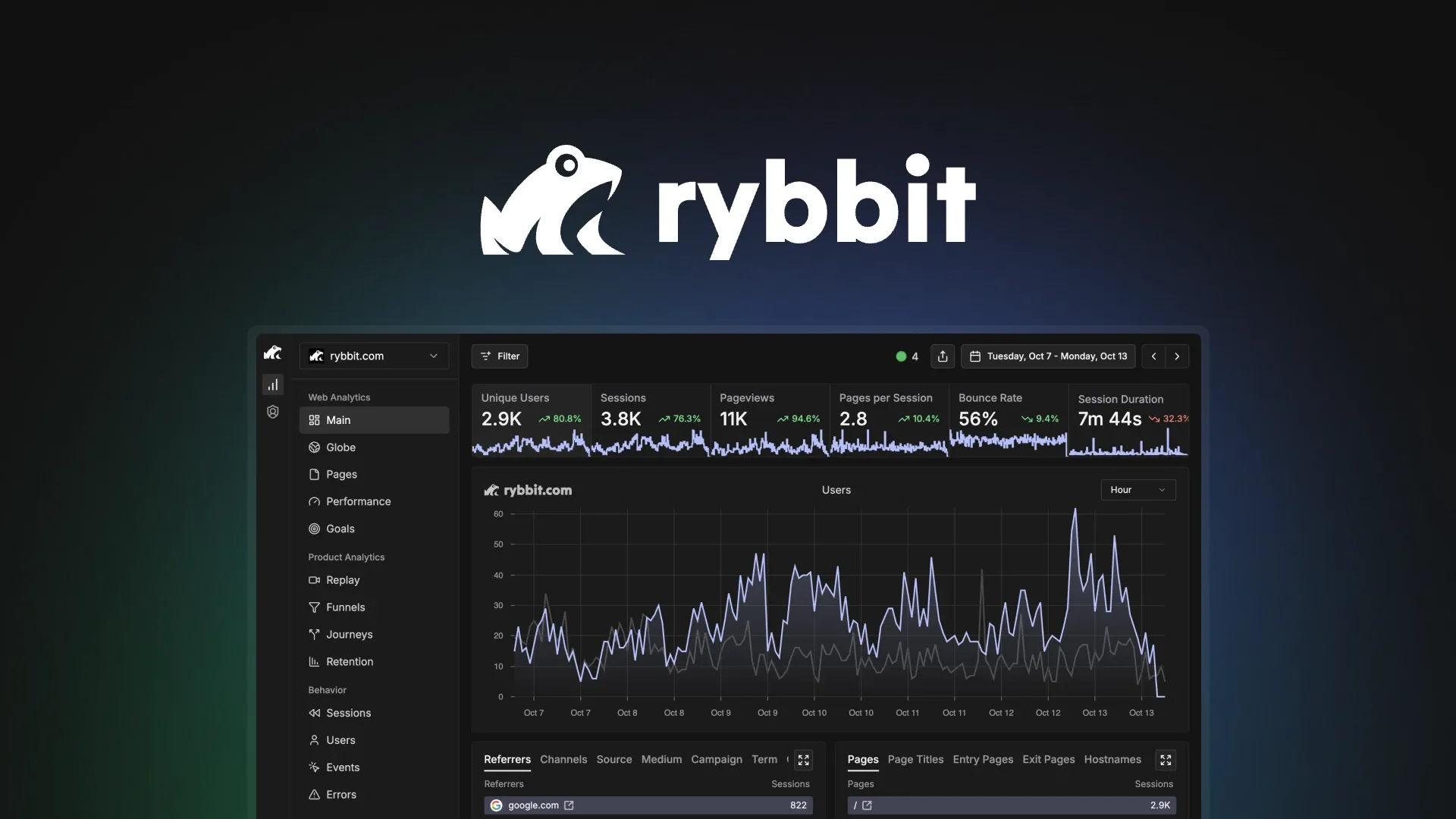
Rybbit is a web analytics platform built from scratch with privacy as the foundation, not bolted on afterward. It's cookie-less by design, GDPR-compliant out of the box, and produces lightweight tracking scripts that won't slow down your pages.
This isn't a Plausible fork. It's an independent project with its own data model. For developers running personal sites or small products who want real analytics data without feeding Google, Rybbit is a fresh and actively developed option that's lighter on resources than PostHog. Setup complexity: Low.
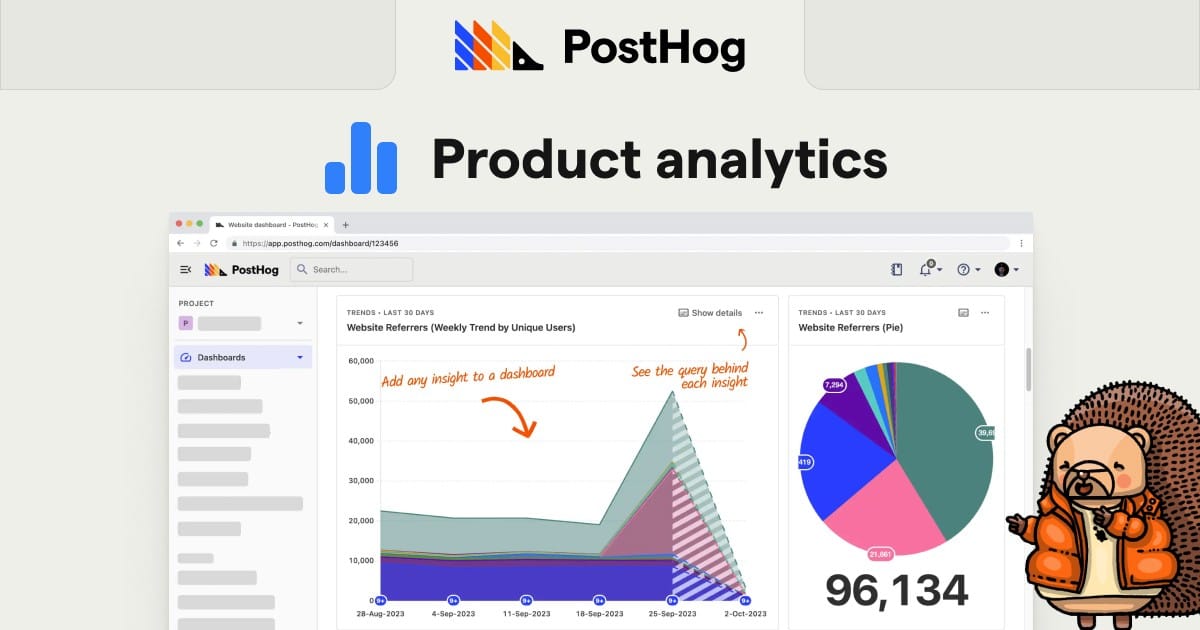
PostHog
If you need more than page views, PostHog is the serious option. It offers session recording, product analytics, feature flags, A/B testing, and heatmaps in a single self-hosted platform. It's an alternative to combining Mixpanel, HotJar, and LaunchDarkly, all at once.
PostHog is heavier to run than Rybbit. You'll want a VPS with at least 4 GB of RAM for a comfortable deployment, and the setup takes longer. But for teams building products who want full telemetry without sending user data to third-party SaaS providers, it's the most complete self-hosted option available. Setup complexity: High.
File and document tools
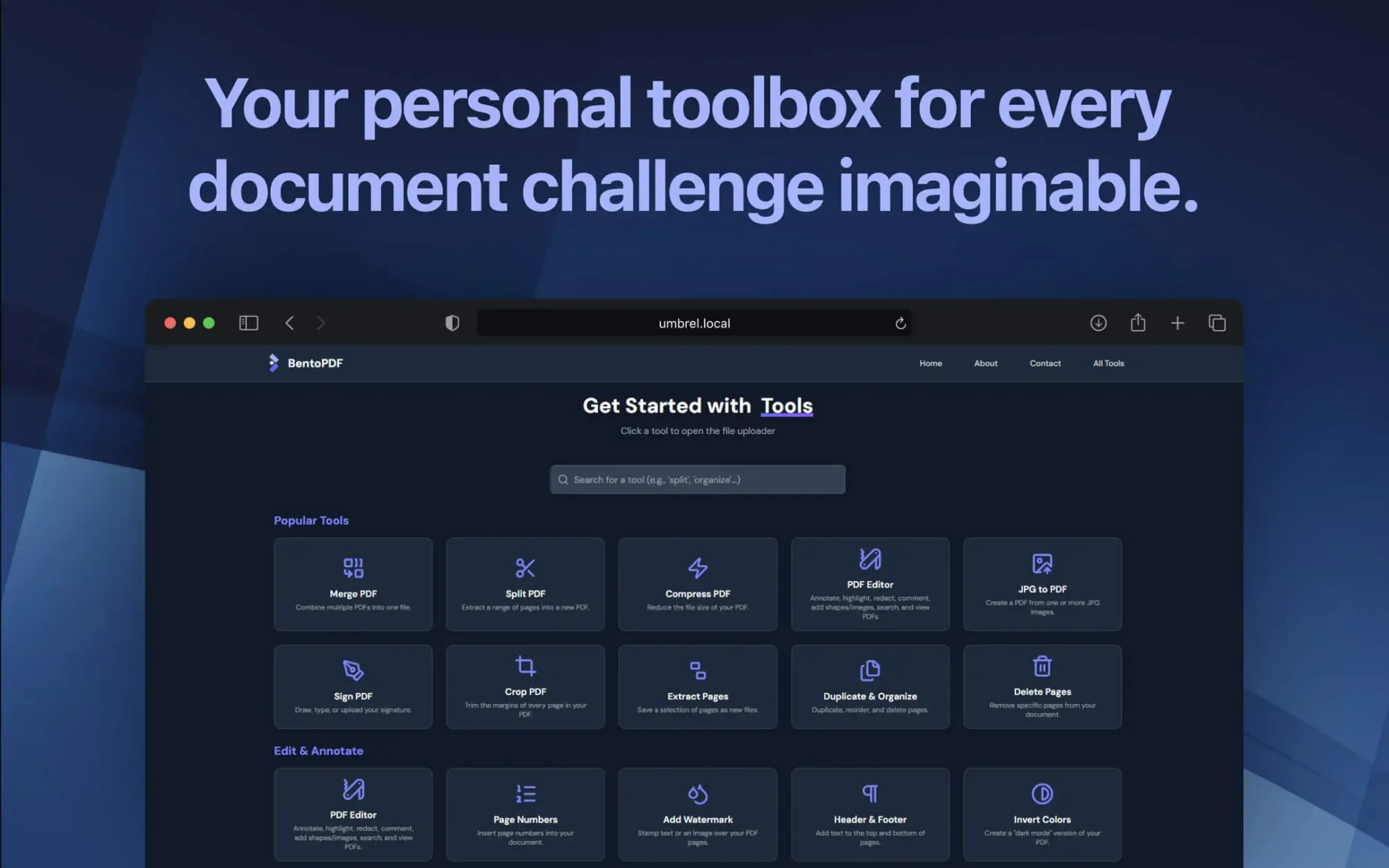
BentoPDF
BentoPDF is a browser-based PDF toolkit with more than 70 operations: merge, split, compress, rotate, extract pages, convert, OCR, and more. It crossed 6,500 GitHub stars within months of launch, which is a strong signal for a niche utility tool.
If you've been using Smallpdf or ILovePDF for document work and you'd rather not upload sensitive files to an external service, BentoPDF runs locally in your browser after a simple Docker deploy. No files leave your machine. Setup complexity: Low.
Photo management
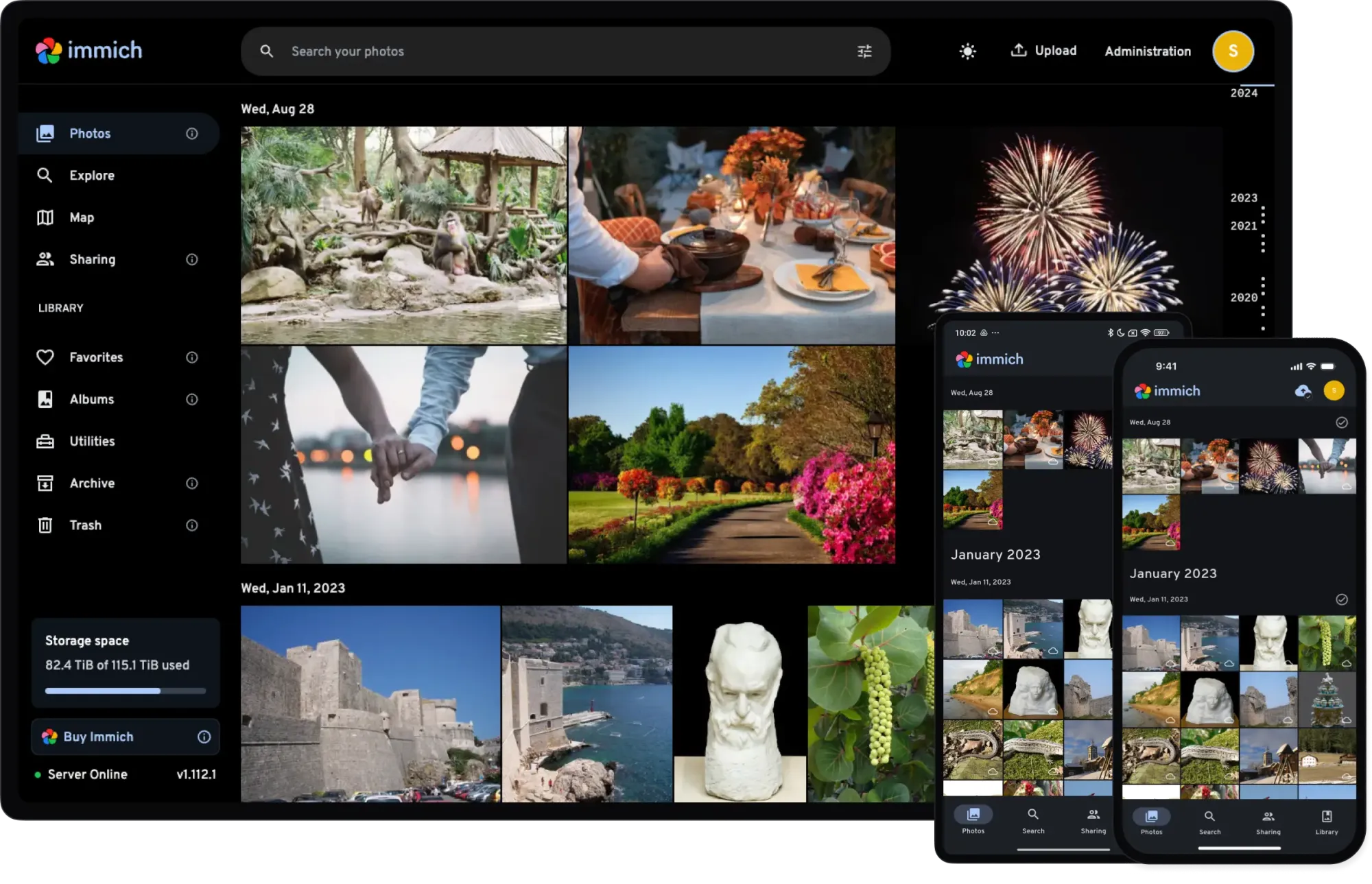
Immich
Immich has been the most-discussed photo management tool in the self-hosting community for over a year, and it continues to earn the attention. It's a Google Photos replacement that runs local machine learning models for auto-tagging, face recognition, album suggestions, and search.
You can search your photo library by content ("dog at the beach"), by face, by location, by date, or by camera. The mobile apps (iOS and Android) handle automatic backup from your phone. The interface is polished and fast.
The setup requires more resources than most apps on this list because the ML models need GPU or a reasonably capable CPU to run without lag. If your home server is an old laptop or a Raspberry Pi, expect slower processing times for the AI features. Everything still works; it just takes longer. Setup complexity: Medium.
Books and reading
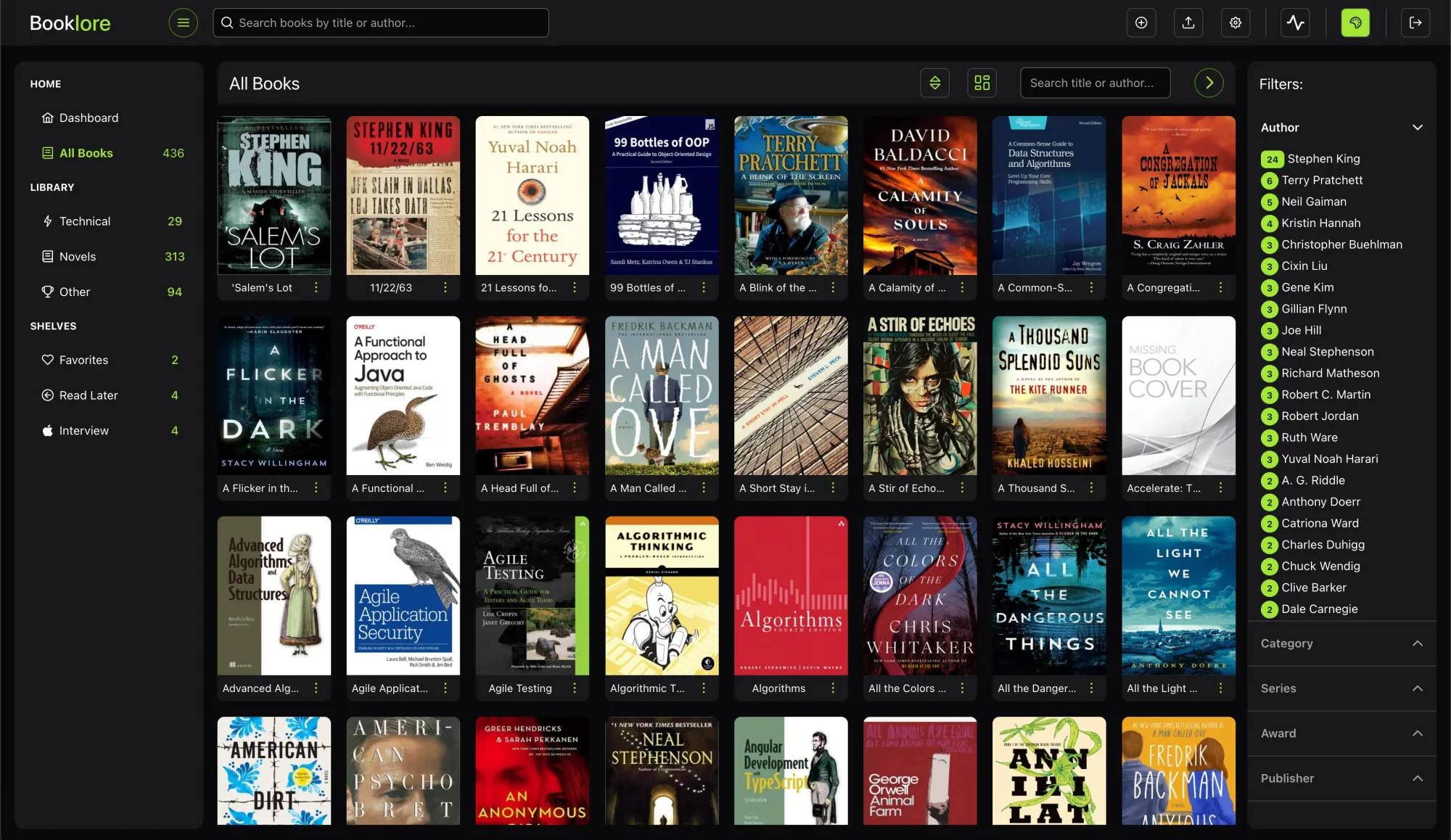
BookLore
BookLore is a personal book library and reading tracker with a clean web interface, smart shelves, OPDS support for e-reader integration, and third-party metadata fetching. If you have a collection of ebooks or comics and you want a proper library interface instead of a folder full of files, BookLore is the most polished new option in this space.
It fills a gap between Calibre (powerful but dated UI) and fully cloud-based reading apps. OPDS support means you can browse your library from a Kobo, Kindle, or any e-reader that supports the standard. Setup complexity: Low.
How to get started self-hosting these apps
Most of the tools above deploy with a single Docker Compose file. If you're comfortable with Docker, pick one tool from the list and spin it up this weekend.
If you're new to self-hosting or running a home server for the first time, starting with a management interface like Coolify or CasaOS gives you a GUI dashboard for deploying and managing containers without touching the command line for every step.
For community support and new app discoveries, the r/selfhosted subreddit and the selfh.st weekly newsletter are the two best resources to follow. selfh.st in particular covers new releases weekly and is how most of the tools on this list came onto the radar.
Three self-hosted trends worth watching in 2026
Local AI is becoming a first-class feature. Karakeep's LLM integration isn't unique for long. More self-hosted apps are adding optional local inference support, which means you can get AI-powered features like tagging, summarization, and search without sending data to an external API. If you're running Ollama locally, expect your app stack to start using it.
Privacy-first analytics are replacing SaaS subscriptions. Tools like Rybbit and PostHog are getting genuinely competitive with paid services. The marginal cost of running your own analytics is now mostly setup time, not ongoing maintenance burden.
Lightweight alternatives to heavyweight incumbents are winning. Sync-in versus Nextcloud, Docmost versus Confluence, Streamyfin versus a full commercial Plex subscription. The pattern is consistent: a newer, focused tool does 80% of what the heavyweight does with a fraction of the complexity. For solo builders and small teams, that trade-off is increasingly attractive.
Which new self-hosted apps to run first
The best new self-hosted software in 2026 isn't a single app. It's the one that solves the problem you're currently handing to a SaaS provider.
If you're paying for a social scheduler, try Postiz. If you're uploading PDFs to a web service, deploy BentoPDF. If you want to stop giving Google your photo library, set up Immich. If you're already running Jellyfin and watching YouTube, add Pinchflat this weekend.
Each of these tools is a one-time setup that replaces a recurring bill or a privacy trade-off. The awesome-selfhosted repository on GitHub is the canonical source for discovering more; it's one of the most-starred lists in open source for a reason.
Start with one. See how the setup goes. The community is welcoming to newcomers, the documentation for most of these tools is solid, and the cost of spinning something up on a spare VPS is low enough that there's no reason to wait.
The best new self-hosted software of 2026 is ready. Your subscription fees aren't going to cancel themselves.
Want more tools like these? Bookmark this page and check back monthly. We update our self-hosted coverage as the ecosystem evolves.