
Science Laboratory Equipment List for Schools, Colleges & Research Labs
As students move into university the complexity of the science laboratory equipment increases. They will need more sophisticated tools that prepare students for professional research.

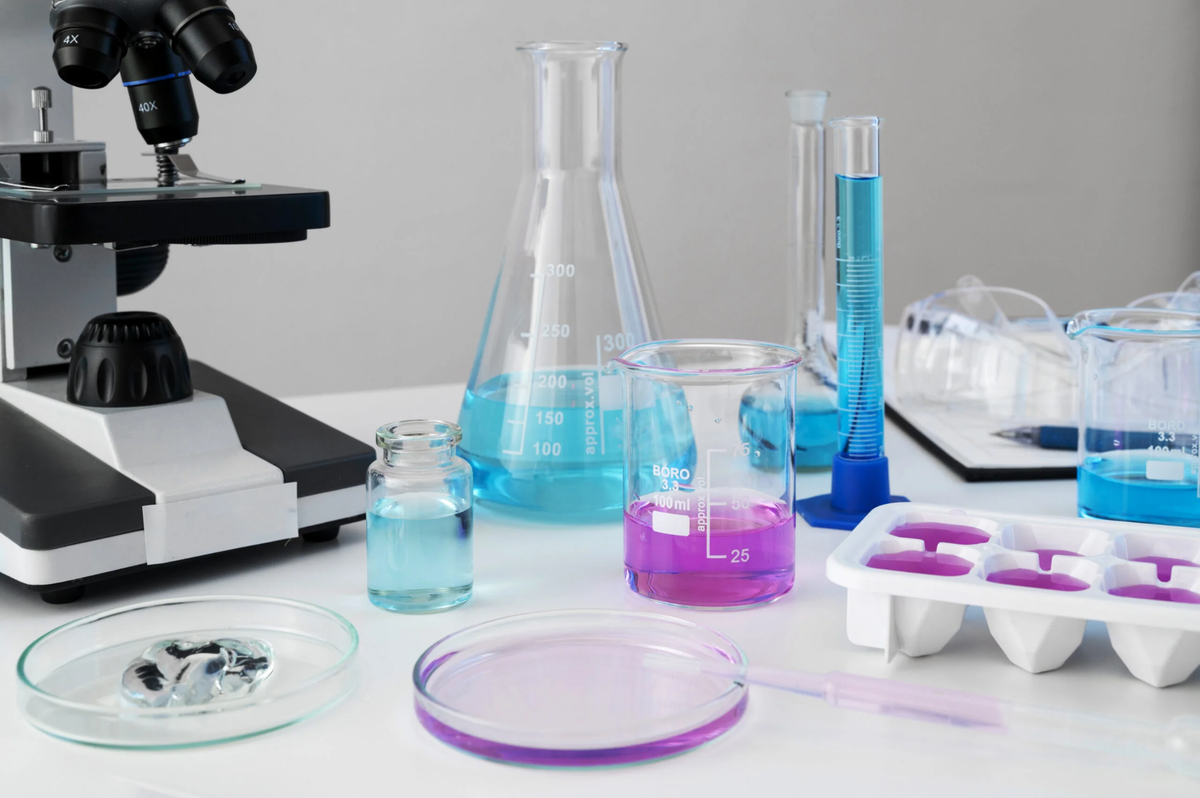
The foundation of scientific discovery, whether in a secondary school classroom or a high-tech industrial facility, rests upon the quality of the tools used. Selecting the right science laboratory equipment is not merely a matter of ticking off a checklist; it is about ensuring precision, safety, and durability. As educational and research requirements evolve, the demand for high-purity materials and custom-engineered solutions has become the standard for modern laboratories.
1. Fundamental Glassware for Schools and Colleges
In educational settings, the focus is often on durability and repeatability. Standard laboratory equipment must withstand frequent use and rigorous cleaning cycles. In these environments, students learn the basics of chemical reactions, making the reliability of the glass paramount.
- Beakers and Flasks: These are essential for mixing and heating chemicals, and they should be made from high-quality borosilicate glass to resist thermal shock.
- Test Tubes and Boiling Tubes: These are fundamental for small-scale reactions and qualitative analysis in biology and chemistry modules.
- Graduated Cylinders: These are crucial for precise volumetric measurements, ensuring students achieve accurate results during practical examinations.
- Condensers and Distillation Kits: These are used in organic chemistry to teach the principles of separation and purification.
For many institutions, the primary challenge is the poor durability of standard, mass-produced glassware. To mitigate this, procuring items from specialised manufacturers like Goel Scientific Glass Works Ltd. ensures that even basic components benefit from industrial-grade manufacturing standards and high-purity materials.
2. Advanced Apparatus for Higher Education
As students move into university and college levels, the complexity of the science laboratory equipment increases. Here, the focus shifts toward more sophisticated assemblies that prepare students for professional research environments.
- Rotary Evaporators: These are vital for the efficient and gentle removal of solvents from samples by evaporation, a staple in any modern chemistry lab.
- Separatory Funnels: These are used in liquid-liquid extractions to separate the components of a mixture into two solvent phases.
- Burettes and Pipettes: These are precision-engineered glass tools required for analytical titrations where accuracy is paramount to the experiment's success.
3. High-Purity Equipment for Research and Industrial Labs
In the realm of advanced research, standard equipment often falls short. Research labs in the chemical and pharmaceutical sectors require tailor-made solutions for specialised applications that can withstand extreme conditions.
- Custom Scientific Glass and Quartz Fabrication: Research often involves high-temperature processes or corrosive environments where standard borosilicate is insufficient. High-purity quartz glass is essential here for its reliable performance in analytical and high-temperature processes.
- Scientific Glass Reactors: These are the heart of chemical processing, requiring precision manufacturing and technical support to ensure safe operation under varying pressures.
- Industrial Technical Packages: Complex assemblies such as Peptide Synthesisers and Temperature Control Units provide a one-stop solution for research and process equipment.
- Heat Exchangers and Evaporators: For industrial-scale research, these components must be engineered for long service life and resistance to chemical erosion.
4. Addressing the Challenges of Lab Setup
One of the most significant hurdles in setting up a professional or educational lab is the limited availability of custom components and the risk of contamination in sensitive processes. While many suppliers offer off-the-shelf products, advanced research demands a level of customisation that standard catalogues cannot provide.
Focusing on precision manufacturing and technical support is vital for any procurement officer or department head. By choosing laboratory equipment designed for high-purity and durability, institutions can avoid the common pitfalls of equipment failure and process contamination, ultimately protecting the integrity of their scientific output.
5. Importance of Material Selection in Specialised Research
Beyond the basic list of apparatus, the specific material used in fabrication plays a critical role in experimental success. In industrial laboratory markets, the choice between standard borosilicate and high-purity quartz often depends on the thermal and chemical resistance required for the task. Quartz glass components are particularly favoured for optical products and high-temperature applications where standard glass might fail or introduce impurities. Selecting materials that offer reliable performance in analytical processes is a core requirement for chemical processing and pharmaceutical research. This focus on high-purity custom quartz glass ensures that research findings remain untainted by equipment degradation, a vital consideration for any high-stakes laboratory environment.
Conclusion
Building a functional laboratory requires a strategic balance between basic essentials and specialised tools. While schools and colleges may focus on the fundamentals of borosilicate durability, research-led institutions must prioritise high-purity materials and custom-engineered assemblies to ensure precision. By choosing equipment designed for reliability and technical excellence, laboratories can ensure a safer, more productive environment for scientific advancement. Investing in the right foundation today, from basic beakers to complex industrial glass process systems, paves the way for the breakthroughs of tomorrow.